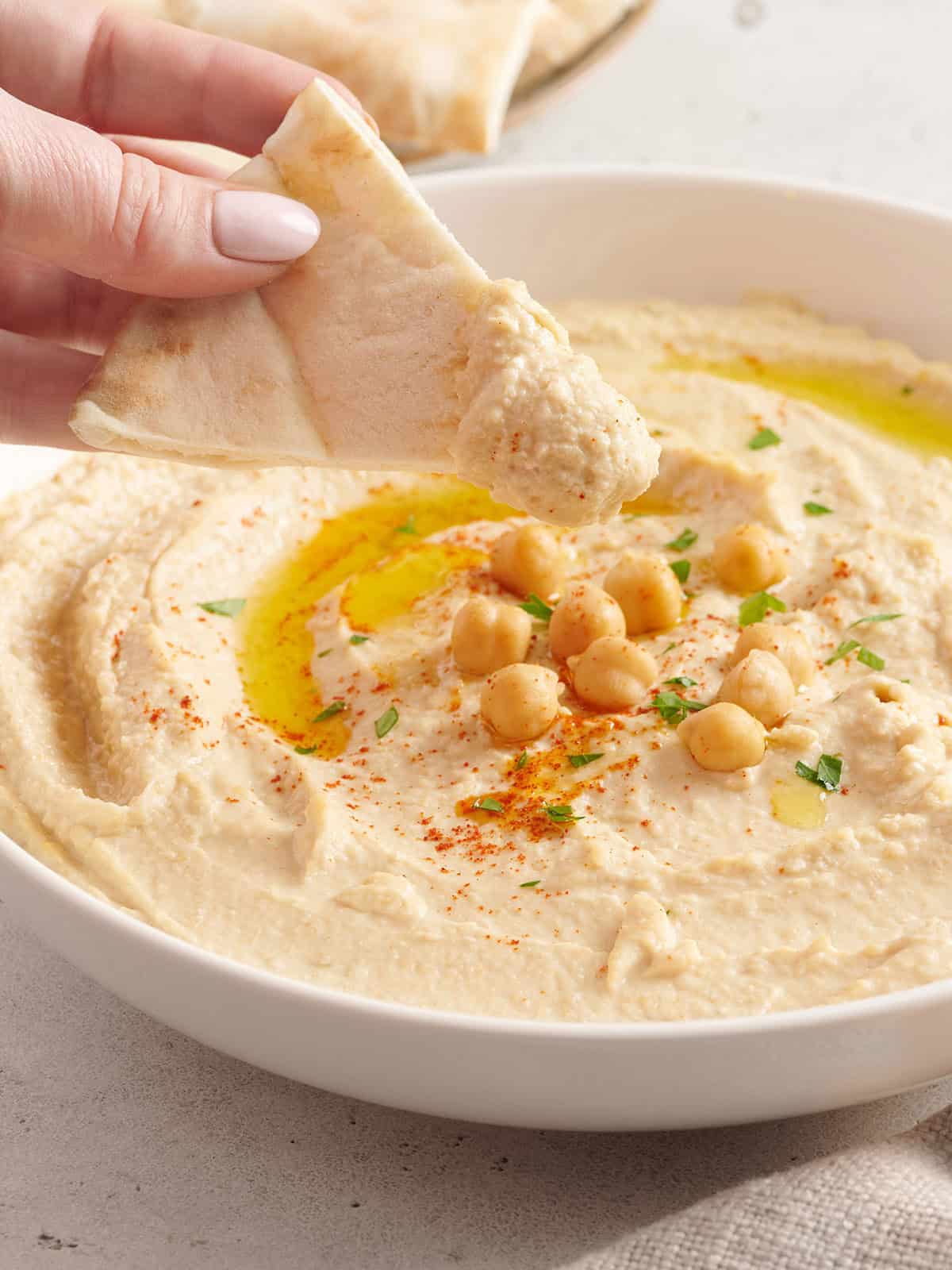
If you haven’t started making your own Homemade Hummus, you’re totally missing out. It only takes about five minutes, you can adjust the taste to be juuuuuust the way you like it, and you can make a different flavor every week so that it never gets old! I promise, once you make your first batch of homemade hummus, you’ll never go back to store bought.
“Delicious and so dang easy! I’m kicking myself for not trying this recipe sooner. Like YEARS sooner. Still, better late to the party than never, I guess. ;-)”
Jooblie
Hummus is a classic Middle Eastern chickpea dip (or spread) made with a handful of really simple ingredients. It’s something I used to just grab at the store without thinking twice, until I realized I can make it at home in the time it takes to find the lid to my food processor!
At its most basic, hummus is made with chickpeas, tahini, olive oil, garlic, and lemon juice. There are a million different things you can add to hummus, and I have posted my basic recipe below, plus add-ins for three flavor variations (jalapeño cilantro, roasted red pepper, and parsley scallion). I’ve also garnished my “original” flavor with a drizzle of olive oil, a sprinkle of paprika, and a few whole chickpeas. All of that is completely optional, but it does make the bowl feel extra fancy.

See how we calculate recipe costs here.
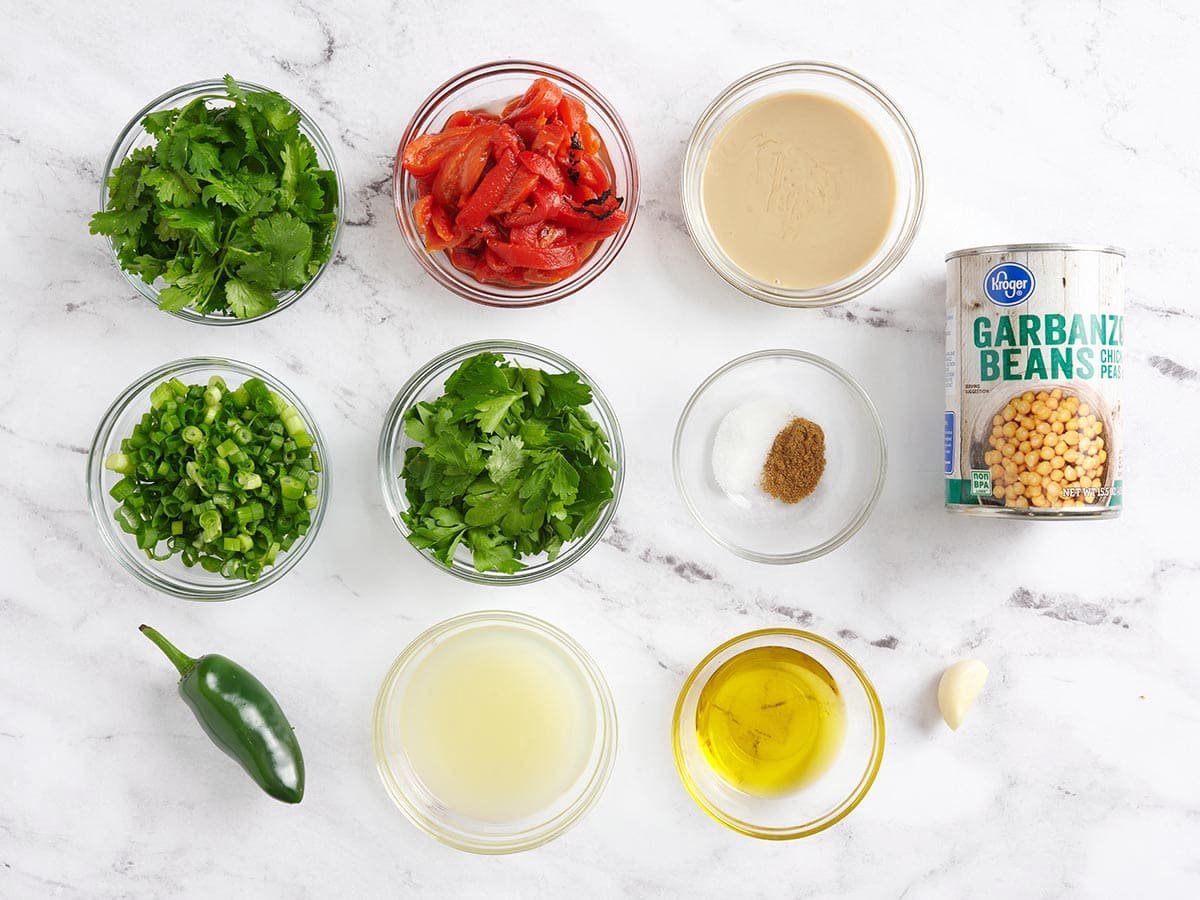
Gather all of your ingredients. I’ve included the ingredients for all four flavor variations in this photo, but you only need the canned chickpeas, olive oil, lemon juice, tahini, garlic, salt, and cumin to make the base recipe.
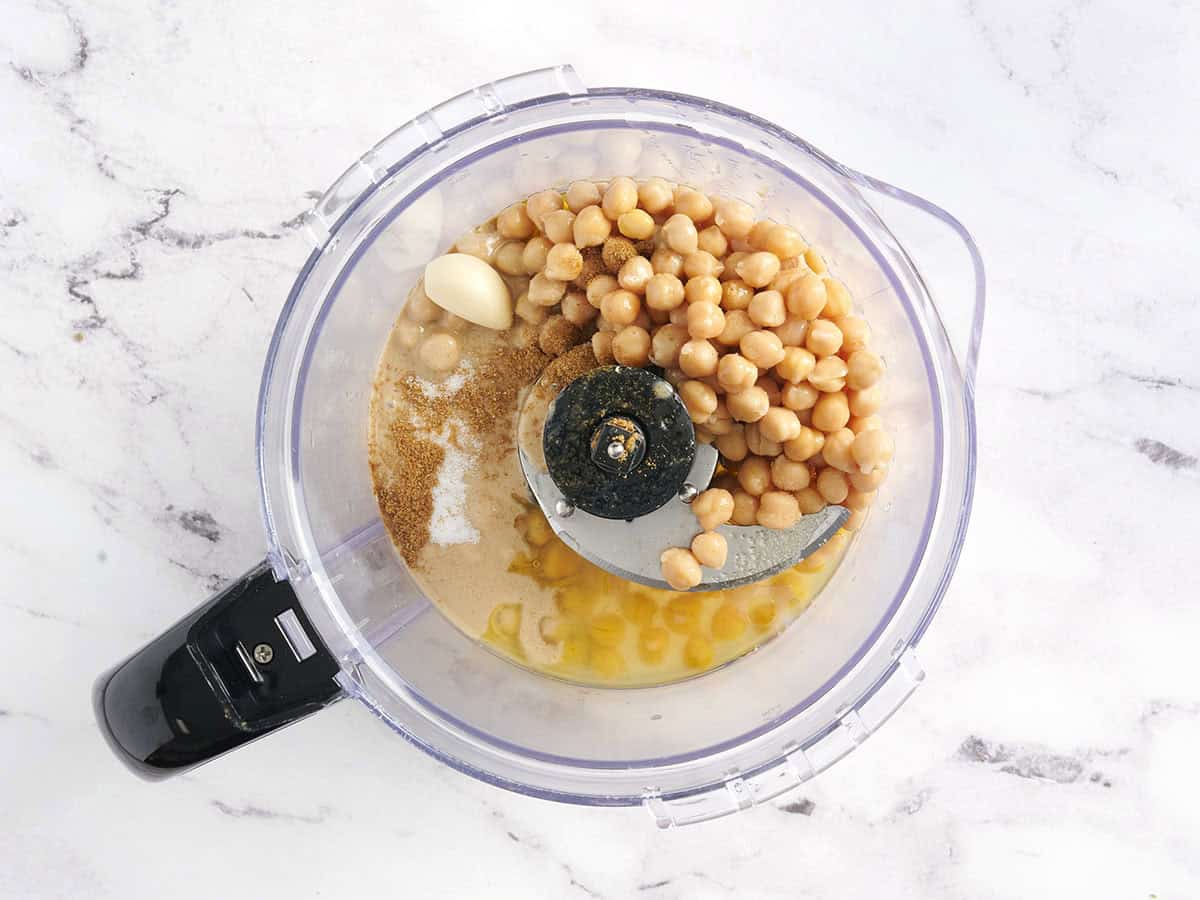
Add to food processor: Drain one 15 oz. can chickpeas and add them to a food processor along with 2 Tbsp olive oil, ¼ cup lemon juice, ¼ cup tahini, 1 clove of garlic, ½ tsp salt, and ¼ tsp ground cumin.
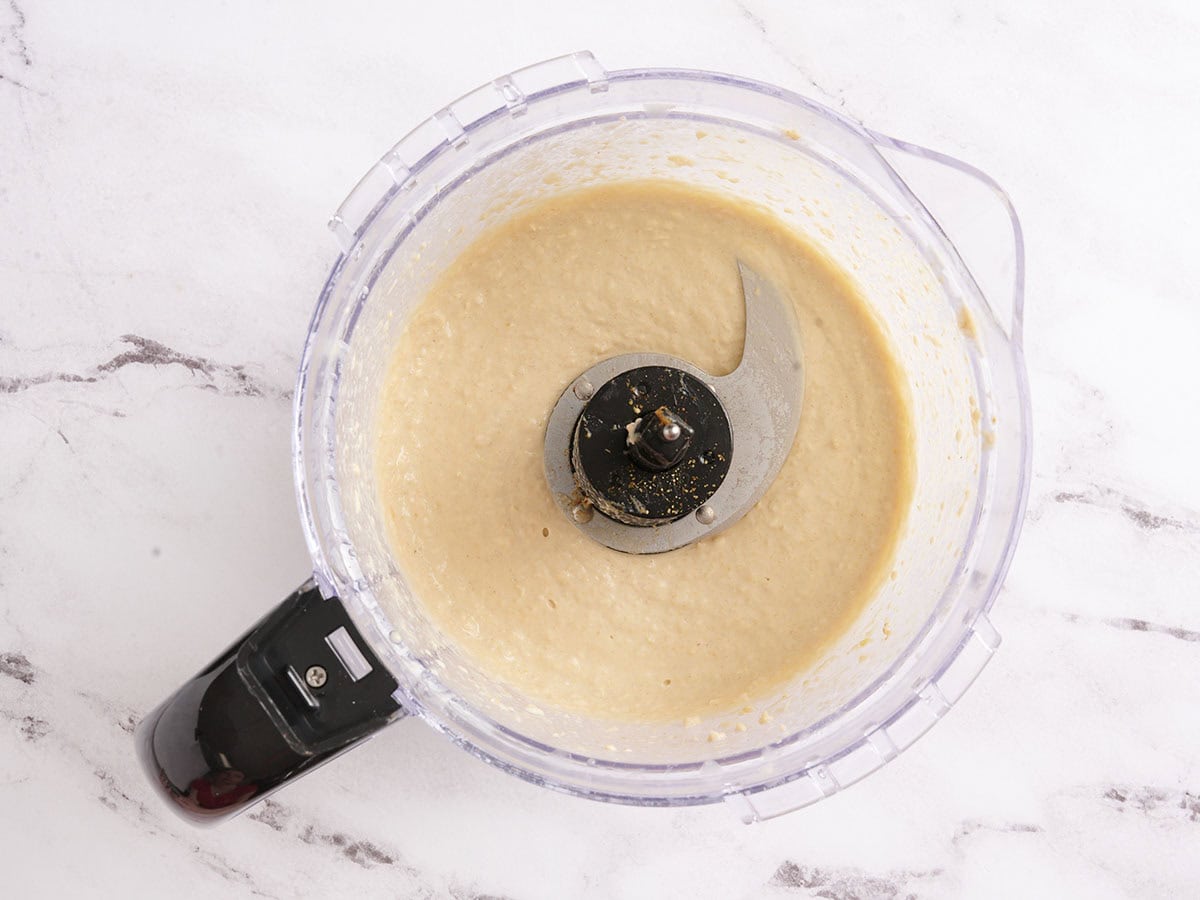
Combine: Pulse the ingredients until they become smooth. If the mixture is too dry to properly purée, add a couple tablespoons of water, olive oil, or even the drained juice from the canned chickpeas.
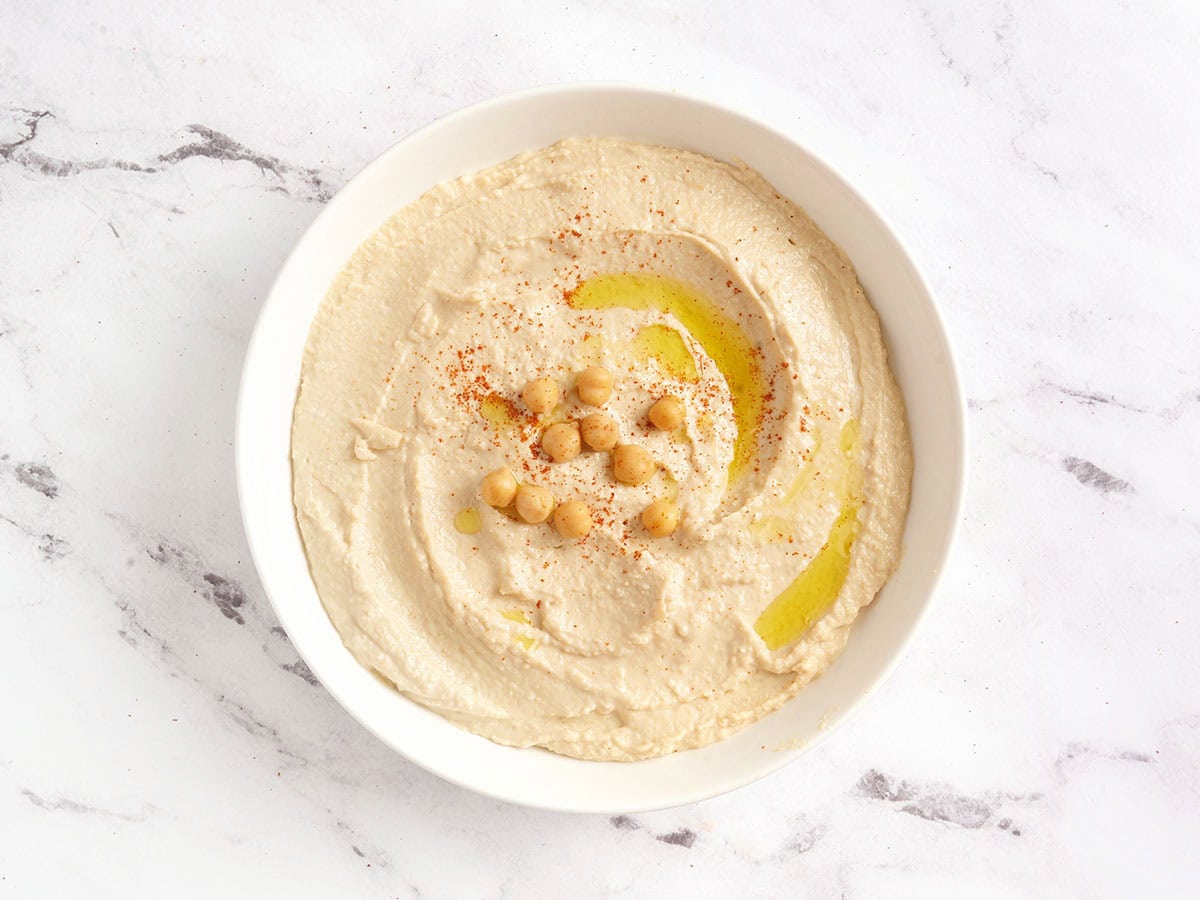
Season and serve: Taste the hummus and adjust the salt, lemon, garlic, or cumin to your liking. And that’s it! That’s all it takes. You can garnish with a drizzle of olive oil and a sprinkle of sumac or paprika.
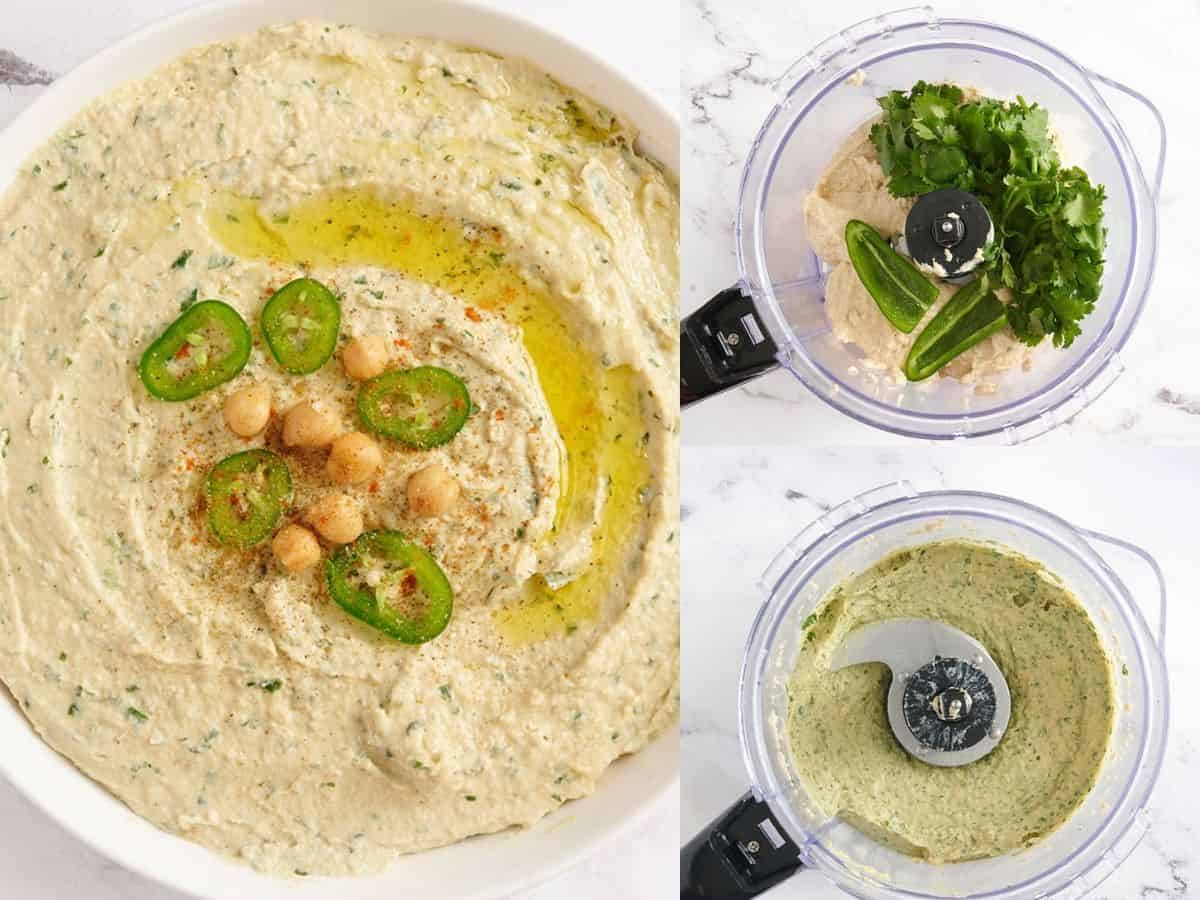
To make Jalapeño Cilantro Hummus: Remove the stem from one jalapeño, slice it lengthwise, and scrape out the seeds with a spoon.
Add the seeded jalapeño and ⅓ bunch of fresh cilantro leaves to the food processor with your basic hummus and process until smooth. This one tastes great with a little extra cumin! You can also try roasting the jalapeños in the oven until soft and blistered for a more subtle flavor (don’t forget to remove the seeds).
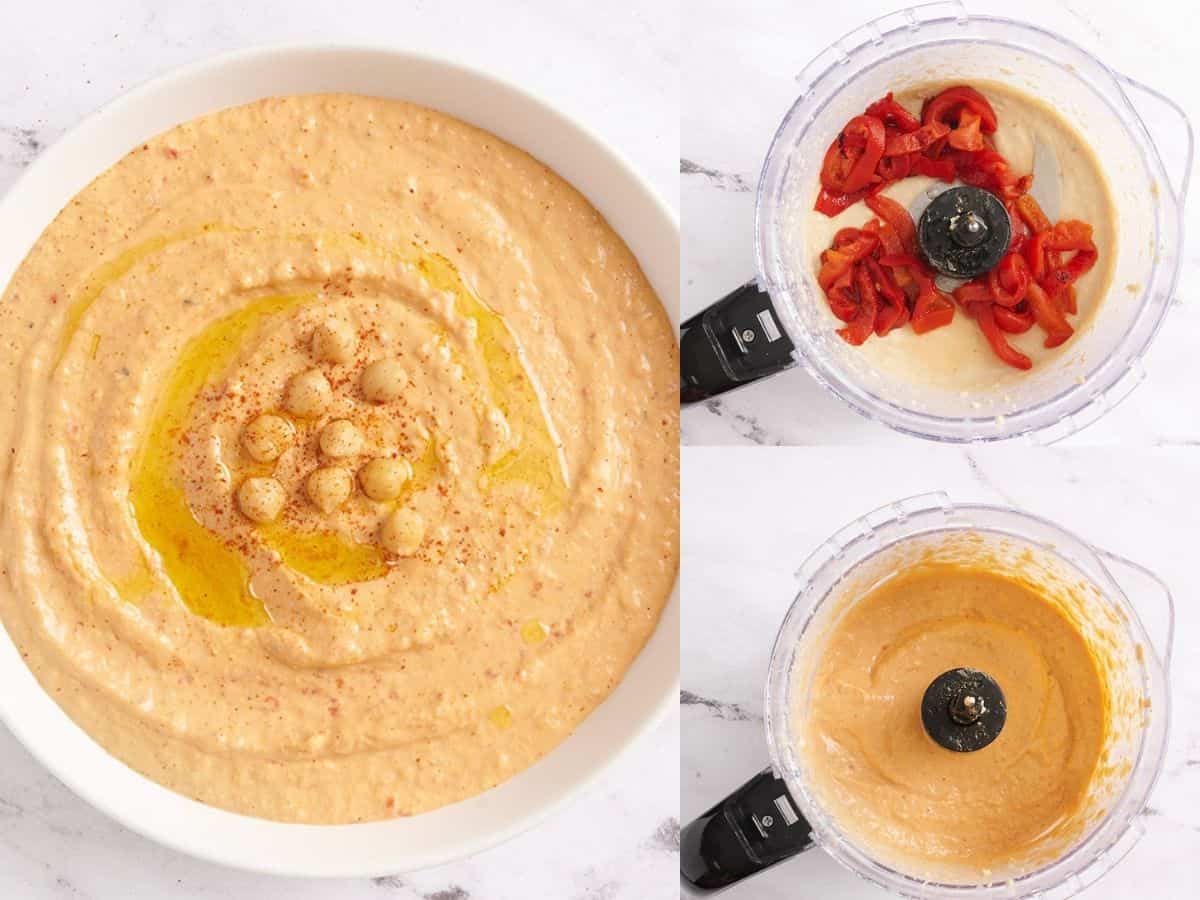
To make Roasted Red Pepper hummus: Simply add one to two whole roasted red peppers (from a jar) to a batch of plain homemade hummus and process until smooth.
Make sure most of the liquid from the jar is drained from the pepper before adding it to the processor to avoid thinning out the texture too much. This one tastes great with a little smoked paprika added to the mix!
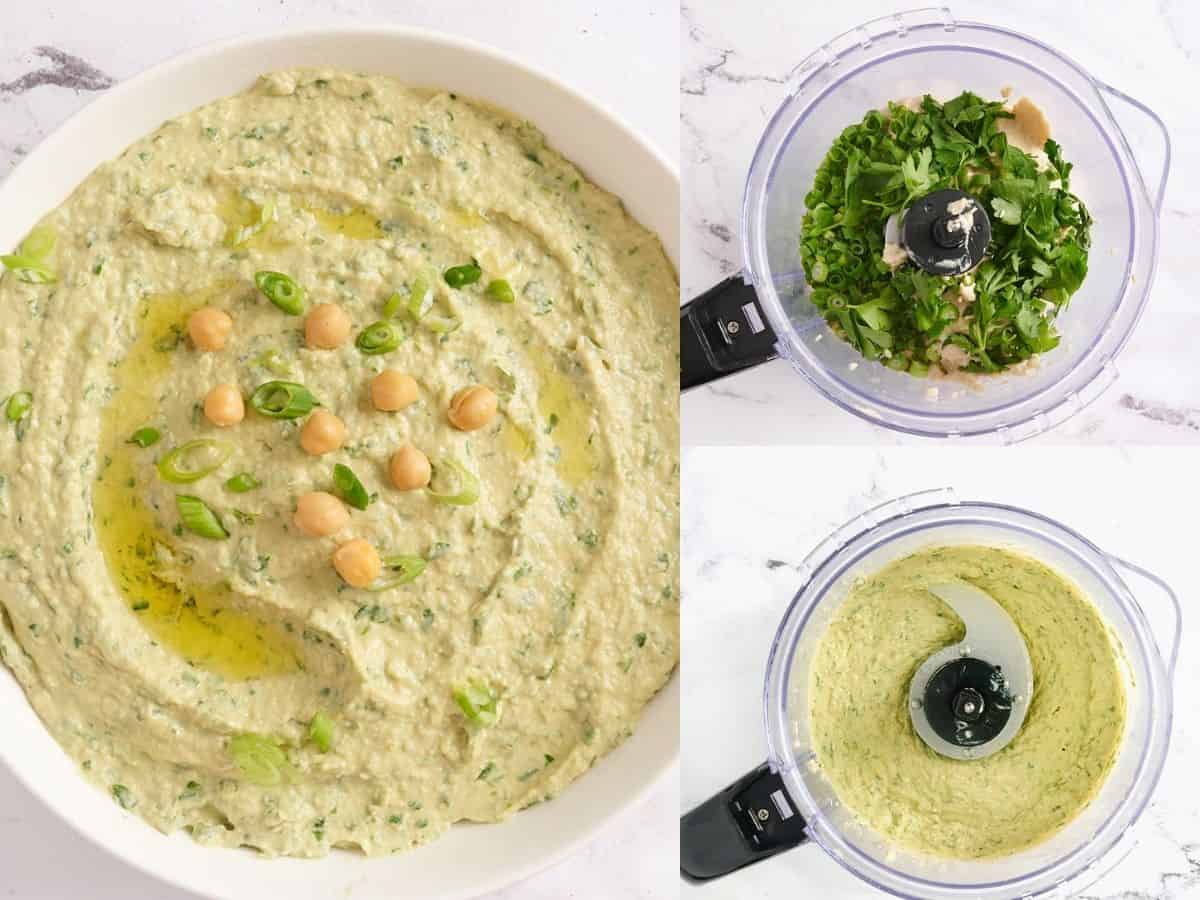
To make Parsley Scallion Hummus: Thinly slice 4 green onions and pull about ½ bunch of parsley leaves from their stems. Add the parsley and scallions to a food processor with a batch of the plain base recipe and process until smooth.
This dip is great with vegetables, as a sandwich spread, or even as a vegan pasta sauce!
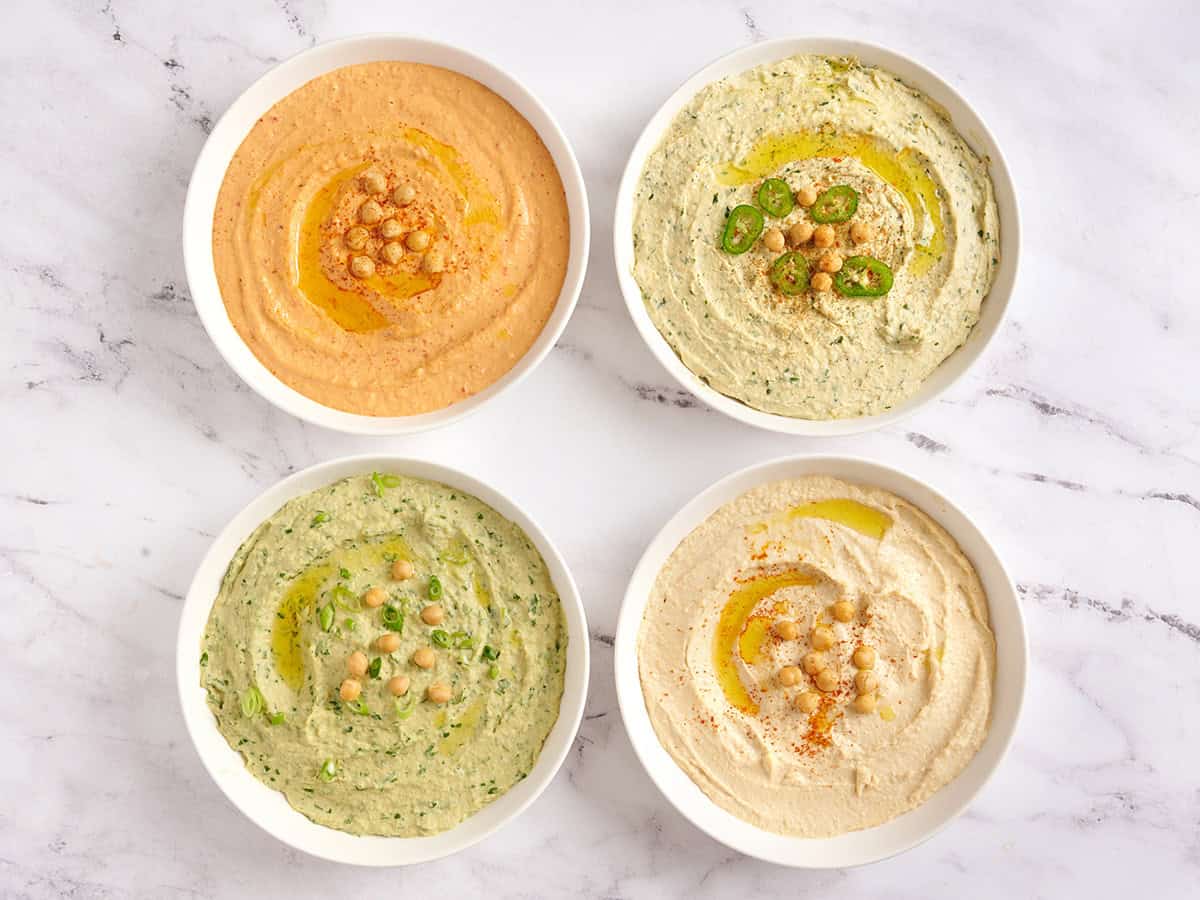
What is your favorite flavor of hummus? Let me know in the comments!
I love keeping a tub of homemade hummus in the fridge because it’s an instant snack for when I’m hungry but don’t want to cook. I usually toast some pita bread and use that for dipping. And if I’ve got some naan around, that’s a whole different kind of treat, especially warmed up for a minute so it’s nice and steamy. You also can’t go wrong with crunchy veggies (cucumbers, bell peppers, carrots), and I’m also a big fan of air-fried tortilla chips.
But don’t sleep on hummus as a spread. It’s rich and creamy and adds moisture, so I use it as a swap for mayo all the time in sandwiches and wraps. I also like adding a spoonful to scrambled eggs (it makes them taste extra rich), or using it as the “sauce” base for loaded flatbreads or quick pizzas with veggies on top.
In the fridge, homemade hummus will stay good for about 3-5 days in an airtight container. Since it doesn’t have preservatives like some store-bought versions, I try to only make what I know we’ll actually snack on in that timeframe.
And yes, you can freeze homemade hummus! Freeze it in a freezer-safe container (I like smaller portions) for up to 2–3 months. Thaw it overnight in the fridge, then give it a really good stir. The texture can be a little less creamy and separated after freezing, but a drizzle of olive oil and a quick stir brings it back to life. If it still feels a little dry, a tiny splash of lemon juice works too, but I usually reach for olive oil first so it doesn’t end up overly lemony.
Our Homemade Hummus recipe was originally published 12/5/10. We have updated it to be the best it can be and republished 1/26/26.
The post Homemade Hummus Recipe Variations appeared first on Budget Bytes.